Reflections about Conrad Festival – by Justyna Sterna (translator ES – PL)
It's hard to fall asleep after a day full of excitement, stress, conversations, switching from one language to another, laughs, aha! moments, seeing familiar faces, walks through a city that is not yours (now you have friends who are better at navigating the gps maps than you, your only job is to try not to slip on the fallen leaves) (and you love that sweet smell and you can't stop thinking about how Gospodinov described the scent of "the autumn's corpse"). Your head is spinning, in your ears you can still hear all the voices of your friends mixed together as you try to catalogue and remember everything what happened in their lives from the last time you saw them (Brussels in June): what they are working on, what they read, what you should think about, what they are proud of. You can't hear your own thoughts so you put unwavering faith in your brain's cognitive functions and in its glymphatic system: when you finally fall asleep it should retain what’s important, flush away all the noise, and do all the housekeeping needed to clean your mind for another day of the festival.
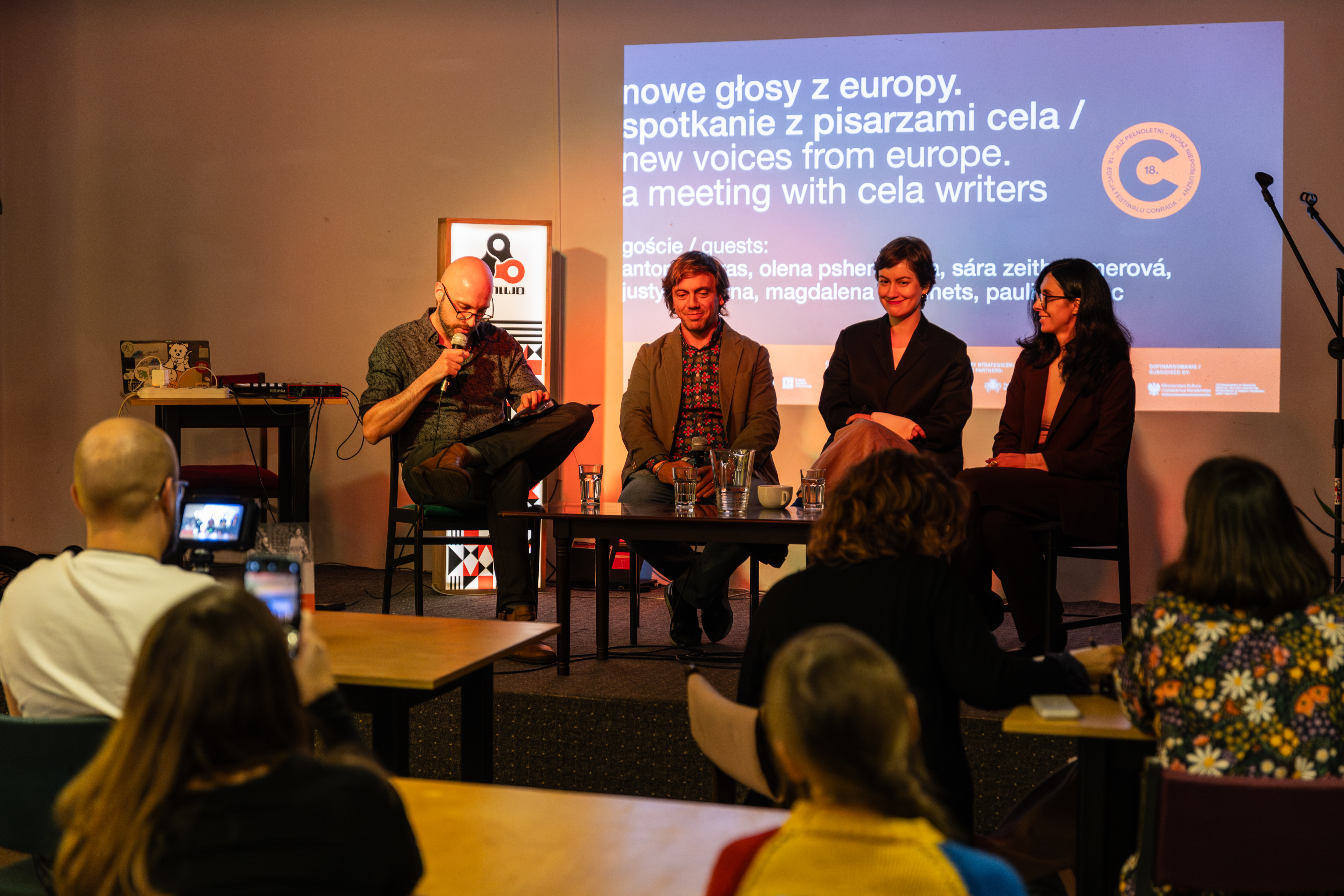
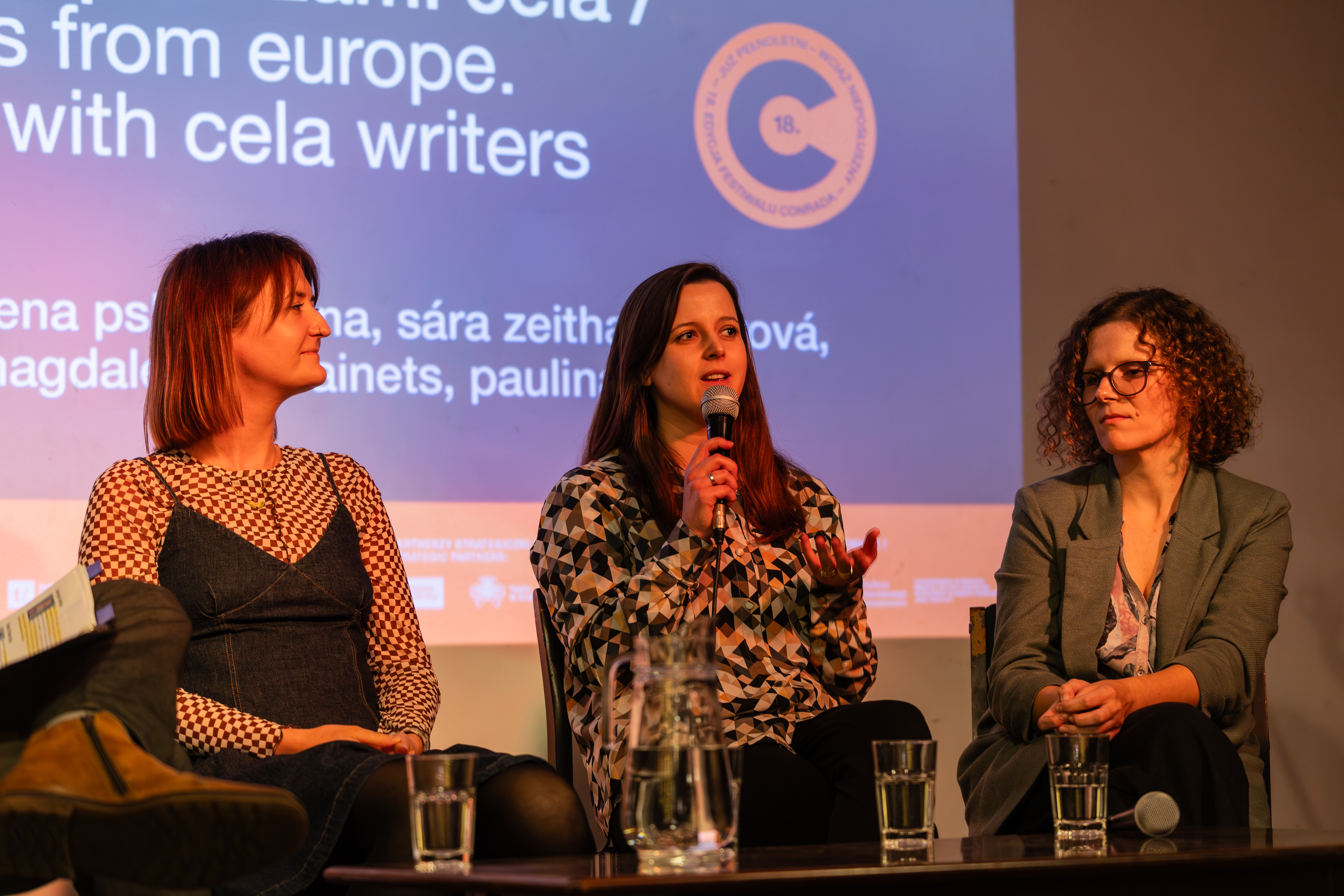
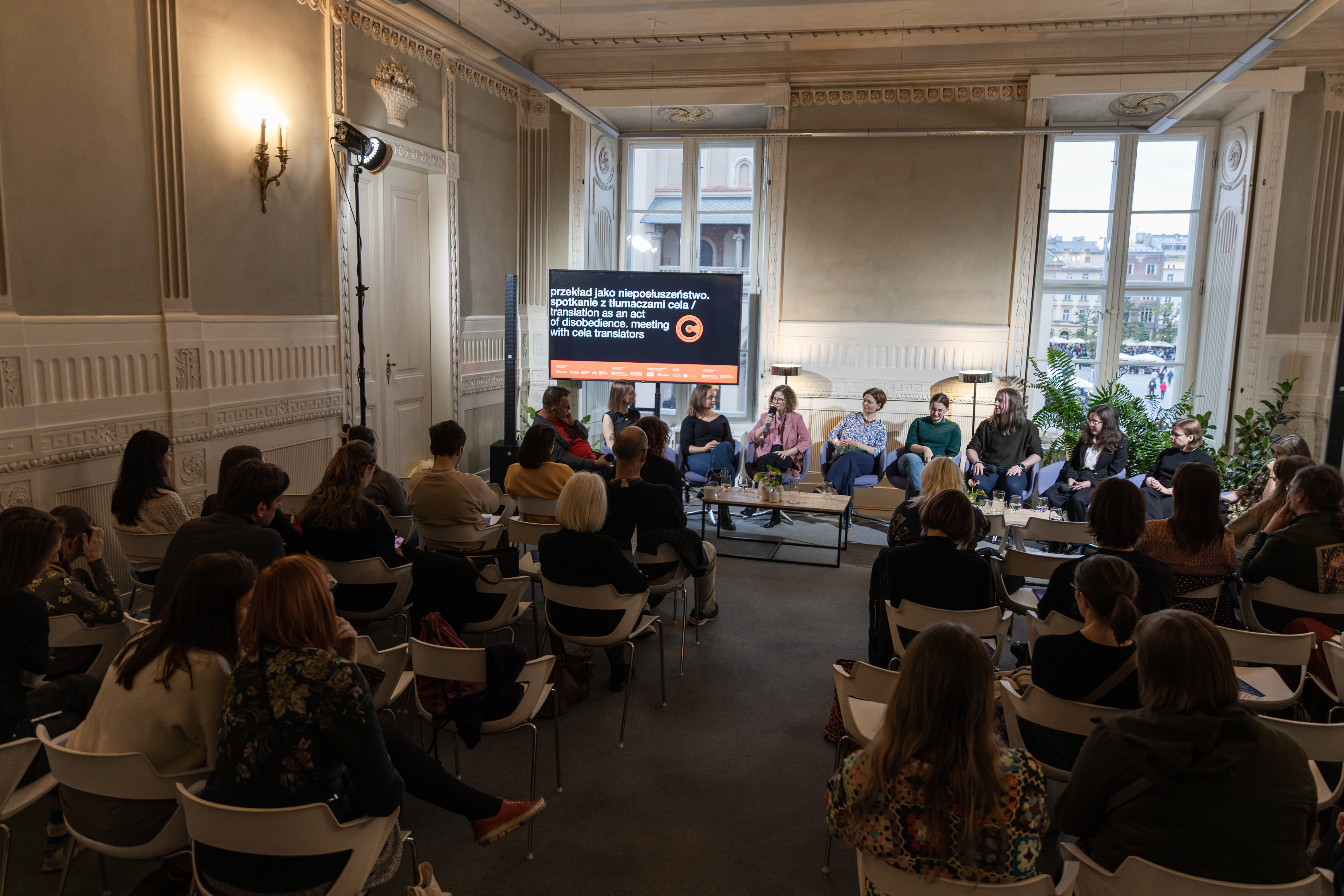
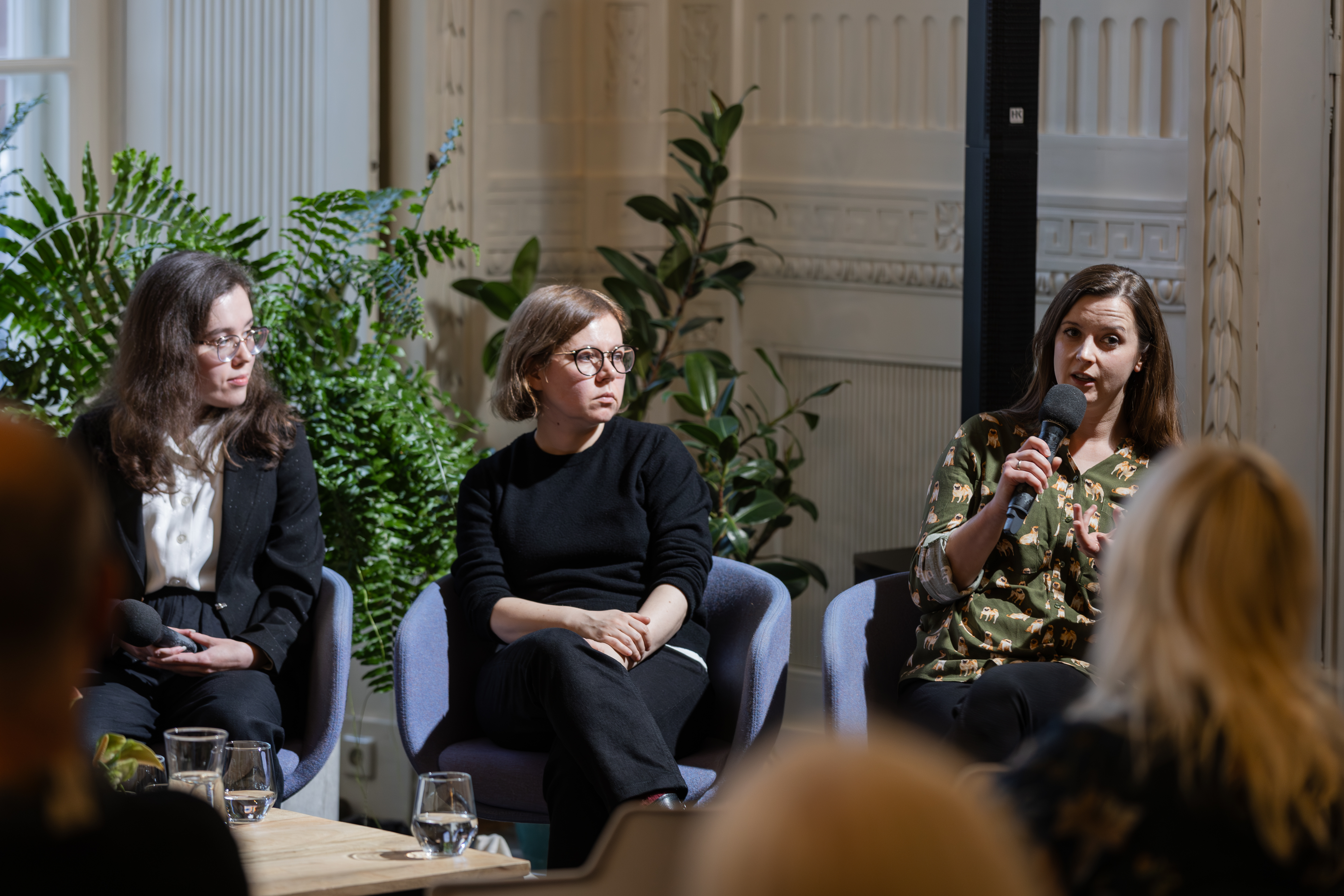
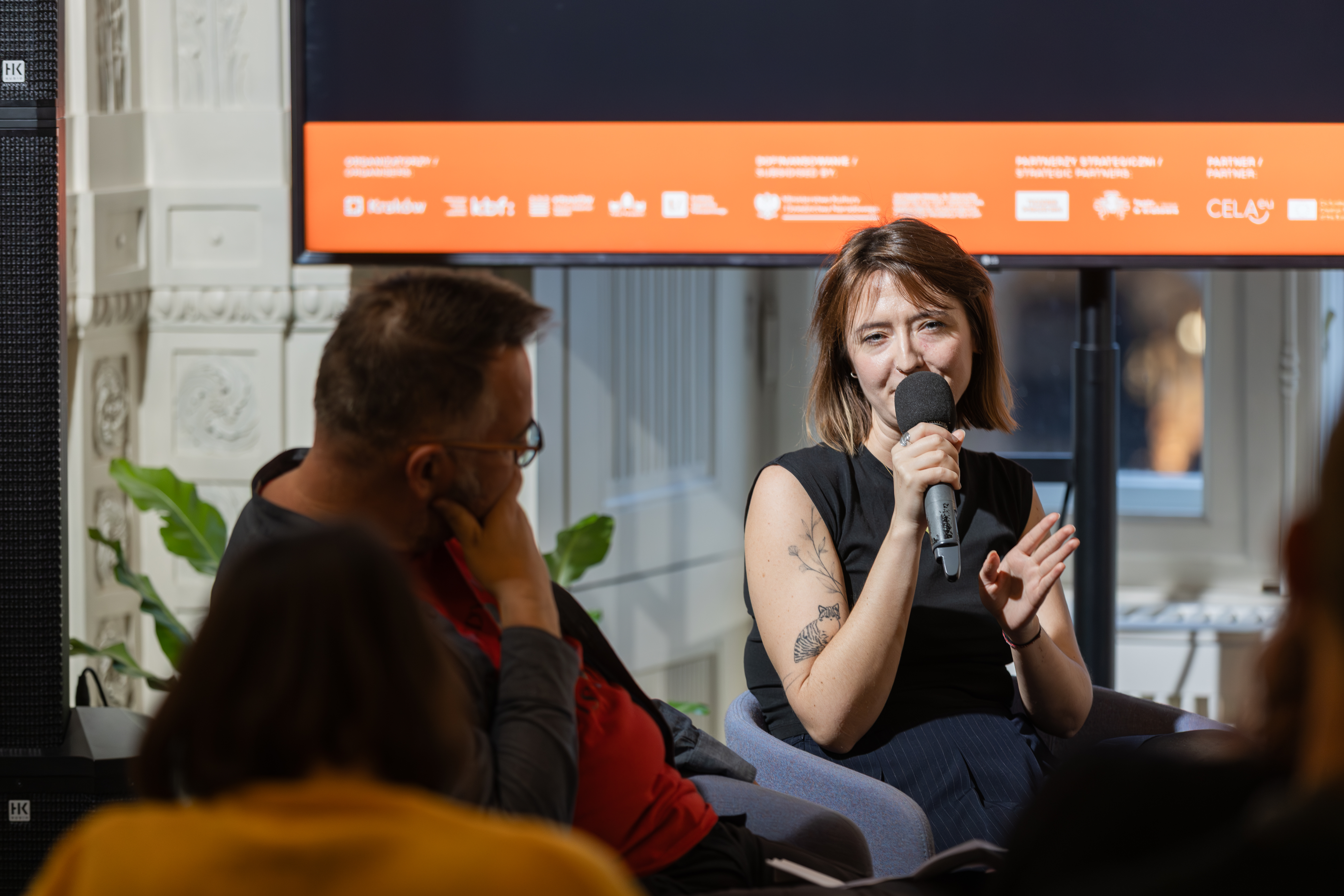
The next day one of your friends, a fellow translator, sounds very hoarse. Paulina says it's because she talked non-stop the whole day. And there were plenty of occasions for that: on Thursday CELA authors who came to Cracow for the Conrad festival: Antonio Lleras from Spain, Olena Pshenychna from Ukraine, and Sára Zeithammerová from the Czech Republic, read fragments of their texts and talked about their experiences of writing. Then we, their translators, Magdalena Ukrainets, who translates from Ukrainian, and Paulina Zając, the translator from Czech, (and myself) read fragments of their texts together with them and talked about our work. And then, the next morning: pitching sessions with the publishing houses. On Saturday all of us translators were on the stage again for a debate and a conversation with one of the CELA mentors.
So that’s the agenda. But in between those events there’s this sneaky drop of sweat that runs down your arm under the sleeve (oh, your weak introverted body), the words of encouragement you all get from your mentor, the juggling you do with the words and the books when you rearrange them as you finish a conversation with one publisher and move on to the next one, the chats in Ogniwo that were always too short even with an extra hour (courtesy of the Daylight Saving Time), the smiles, and the messages on the whatsapp group asking „where are you guys?”, the plans that you all make together, and again that sweet smell of autumnal leaves.
The smell that reminds you, in a painfully cliche way, of the passing of time, and of the fact that probably it was your last get together within the program. But you’ve just written down the dates when your friends’ translations will hit the bookstores, so you don’t want to make this text a sad one, and under no circumstances you don’t want it to sound sappy. You promised that to yourself when you sat down in front of your laptop to write this post (and that’s a lie, being sappy is second nature to you, you can’t run away from it). You had a great time as always, and you’re proud of the progress you’ve all made during those past months and years.
So you decide to try to end on a different note. On Sunday (the last day, after many goodbyes) you went with Antonio (who was risking being late for his flight) to the festival meeting with Juan Gabriel Vásquez. Someone in the audience asked him if he had any advice for emerging writers. You immediately pricked your ears up (is it something for us?). To resume Vásquez’s answer: 1. The mere act of creating literature is already a reward, a success in itself. 2. Practicalities: Read obsessively, as if the world was going to end. 3. If you know more than one language, translate; translating is the best school of writing. 4. The rest is sweat and tears.