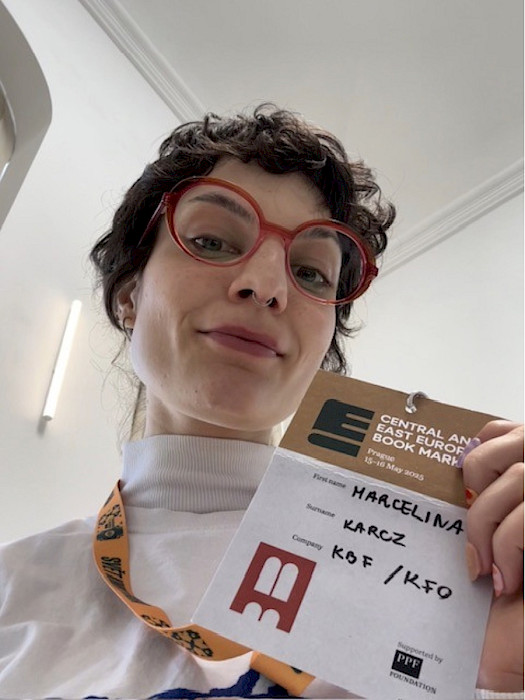
CELA Job shadowing: Prague – by Marcelina Karcz (KBF)
In mid‑May I had the chance to spend a few days in Prague for the Svět Knihy book fair and literary festival, representing Kraków Festival Office as part of the CELA (Connecting Emerging Literary Artists) programme. The trip ran from 14 to 18 May and, although short, it was packed with conversations, events, and encounters that offered a fresh perspective on how literary communities across Europe work, grow, and support one another.
Svět Knihy is one of those festivals that immediately pulls you into the buzz of the literary world. It brings together everyone you’d expect—publishers, writers, translators, agents, festival organisers, critics—as well as a wonderfully engaged public. What stood out to me most was the strong sense of connection across borders. Even though each country has its own traditions and challenges, you can feel a shared belief in the value of literature and in the importance of building a supportive space for emerging voices. That feeling sits at the core of CELA’s mission, so the festival ended up being the perfect environment to reflect on the programme’s role and potential.
Over the course of the fair, I took part in numerous discussions and panels covering everything from contemporary literary trends to translation dilemmas, from reader engagement to the practicalities of international publishing. Many conversations circled back to a simple but essential truth: emerging writers and translators need not only talent but also strong networks and opportunities to share their work across languages and cultures. Programmes like CELA help create those opportunities—which is precisely why being in Prague was so valuable.
A key part of the trip was meeting representatives from the various partner organisations involved in CELA. Some of us had met before online, others only in passing, so having the time and space for real conversations was incredibly enriching. We talked about our daily work, our local literary scenes, what’s been working well, and where we still see gaps or challenges. There was a lot of honesty and curiosity, which made the discussions feel productive rather than purely formal. I came away with new ideas for future collaborations—both within CELA and possibly beyond it. There’s something energising about realising that people in different countries are facing similar questions and are eager to think them through together.
Of course, the festival itself also offered plenty of inspiration. The Czech literary landscape is vibrant and deeply rooted in a strong reading culture. Bookshops feel lively, independent publishers are highly visible, and literary events attract genuinely enthusiastic audiences. Observing this firsthand made me think about how different European cities support their literary communities, and what we might adapt or experiment with in Kraków. It's always refreshing to see how another market functions—not to compare, but to learn.
Translation, naturally, played an important role in many sessions I attended. Several discussions touched on the translator’s position as both craftsperson and cultural mediator. Hearing translators speak about their work, especially those working between less commonly paired languages, was a reminder of how much dedication and emotional labour the profession requires. These conversations aligned closely with CELA’s focus on bringing emerging translators into the spotlight and supporting them in building sustainable careers. As someone who frequently works with translation‑related projects, I found these sessions particularly meaningful.
Another highlight of the trip was the chance to meet authors and editors who are shaping contemporary literature in Central and Eastern Europe. Some spoke about working in smaller markets, others about the increasing visibility of our region's voices in the wider European context. Listening to their perspectives reinforced how important cooperation across borders truly is—especially when it comes to promoting new work and navigating the international rights landscape.
Outside the official programme, Prague offered plenty of space for reflection. There’s something grounding about stepping away from your usual environment and seeing the literary world from another angle. I found myself thinking a lot about how festivals function not just as celebrations of literature but also as strategic platforms—places where new ideas take shape, where partnerships form, and where emerging talent can find encouragement and visibility. Svět Knihy, with its mix of industry focus and genuine public engagement, is a perfect example of how a festival can balance these roles.
By the end of the delegation, I returned to Kraków with a notebook full of ideas, a renewed sense of purpose, and a list of new contacts I’m excited to stay in touch with. The insights gained in Prague will feed directly into the literary and educational projects we develop at Kraków UNESCO City of Literature team at the Krakow Festival Office, and they reaffirmed how essential international collaboration is for keeping our work vibrant and responsive.
Above all, the trip was a reminder that literature thrives when people share resources, knowledge, and enthusiasm across borders. That spirit—open, experimental, and supportive—is something I hope to carry forward into everything we build within the CELA network and beyond.