CELA About Talents News Calendar Contact Reading Room

Facebook Instagram Newsletter LinkedIn
View all filters #3 2024-2027 Where the Wild Things Grow Transformation Clear

Where the Wild Things Grow

Explore our connections with ecology, rituals, the cosmos, and the pressing climate challenges of our time

Tri!

Translated from Czech to Slovenian by Aleš Belšak
Written in Czech by Anna Luňáková
7 minutes read

Sulinin glas

Translated from Dutch to Slovenian by Lucija Janc Novak
Written in Dutch by Anneleen Van Offel
6 minutes read

Svatá

Život ovdovělé hospodské Aloisie se obrátí vzhůru nohama ve chvíli, kdy se její dceři Kristě zjeví v lese Panna Maria. Třebaže ji krom Kristy nikdo neviděl, zpráva o zjevení se rychle rozkřikne, do zapomenutého kraje začnou proudit zástupy a zadlužená hospoda konečně prosperuje. Krista je stejnou měrou okolím adorována i nenáviděna. Sama Aloisie neví, na kterou stranu se přiklonit. Je její dcera lhářka, nebo vizionářka? A zjevuje se v lese skutečně Matka Boží, nebo něco mnohem děsivějšího? Příběh o lásce, víře a nekonečné vůli vychází ze skutečných událostí, které se odehrály v devatenáctém století na Broumovsku.
Written in Czech by Sára Zeithammerová
9 minutes read

La rinnegata

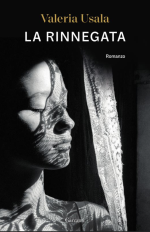
A story of three generations of women, their courage and search for independence in the face of superstition and prejudice, in the spirit of Natalia Ginzburg and Elena Ferrante. In this striking debut, based on a true story, Valeria Usala bears witness to an age-old story of violence against women and takes us into the heart of rural Sardinia, where superstitions and cruelty coexist with the joys and companionship of a tight-knit community. Teresa runs a shop and a tavern. But not even the family she has created with the man she loves can protect her from the malicious gossip of jealous locals, who are threatened by her independence. Her own mother, Maria, was made an outcast, and now Teresa is in turn forsaken by the villagers. Will she pay for her success with her life? Is she like a character in Greek tragedy, whose destiny is inevitable? A story that gives voice to the forgotten women of Sardinia—and to the one of women everywhere.
Written in Italian by Valeria Usala
10 minutes read

Hele, holky (It’s Both Heaven and Hell Here. Moldova: a Century of Lived History)
Translated from Romanian to Czech by Klára Našincová
Written in Romanian by Paula Erizanu
6 minutes read

Het begin en zijn oneindigheid

Translated from Dutch to Serbian by Jana Živkić
Written in Dutch by Corinne Heyrman
9 minutes read

Fuga (Matematica unei crime)

Translated from Czech to Romanian by Andrei Săndulescu
Written in Czech by Magdalena Sodomková
10 minutes read

Meine Mutter hat Blumen gezüchtet (Pogoji niso pomembni)
Translated from Serbian to Slovenian by Natalija Milovanović
Written in Serbian by Ljiljana D. Ćuk
5 minutes read

Гей, дівчата (It’s Both Heaven and Hell Here. Moldova: a Century of Lived History)
Translated from Romanian to Ukranian by Paulina-Ionela Onujec
Written in Romanian by Paula Erizanu
6 minutes read

TRE!

Translated from Czech to Italian by Marco Maria Baù
Written in Czech by Anna Luňáková
8 minutes read

Caseggiati arancioni

Translated from Spanish to Italian by Martino Gandi
Written in Spanish by Luis Díaz
8 minutes read

Оранжевите блокове

Translated from Spanish to Bulgarian by Ivana Peneva
Written in Spanish by Luis Díaz
8 minutes read

Meine Mutter hat Blumen gezüchtet (Uslovi nisu bitni)

Ljiljana D. Ćuk’s short prose dives into the depths of human emotion, exploring a strong sense of existential despair. With a direct and uncompromising style, Ćuk reveals the struggle to make peace with a world that feels broken, where every part of reality comes with an unsettling sense of disgust. Her writing gives readers a raw and intense experience, confronting the challenge of finding meaning in a universe that seems indifferent. "The short prose of Ljiljana D. Ćuk is not only exquisite literature, which it undoubtedly is, but also an expression of general despair, the torment of trying to come to terms with anything that exists, as everything existing is mostly seen and experienced as repulsive in itself." (Srdjan Srdić)
Written in Serbian by Ljiljana D. Ćuk
5 minutes read

Hlas Suliny

Translated from Dutch to Czech by Klára Němcová
Written in Dutch by Anneleen Van Offel
6 minutes read

Sulinin glas

Translated from Dutch to Serbian by Tamara Britka
Written in Dutch by Anneleen Van Offel
7 minutes read

Lotosové květy, které se zavírají (když se do nich vstoupí) (Cesta recepčního)

Translated from Serbian to Czech by Věra Böhmová
Written in Serbian by Nikola Lekić
6 minutes read

Bintje

De rijzige appartementsblokken van de provinciestad, jaren negentig. Bintje groeit op in een verscheurd gezin. Haar Congolese vader is een fanatiek religieuze man, een aan lagerwal geraakte schrijver die geen werk vindt en overdag aan zijn memoires werkt. Hoe gedesillusioneerder hij raakt, hoe meer hij naar de fles grijpt en hoe agressiever hij thuis wordt. Desondanks adoreert Bintje haar vader en probeert ze hem op het juiste pad te houden. Als het echter duidelijk wordt dat hij niet te redden valt, verbreekt ze alle contact. Dertig jaar later is Bintje in hetzelfde bedje ziek. Gescheiden en vervreemd van haar zoon, woont ze nog altijd in de intussen verloederde blokken en worstelt ze met haar eigen verslavingen. Haar job als leerkracht biedt enige houvast, tot ze ook op school de controle verliest en wordt gedwongen haar jeugdtrauma’s onder ogen te zien.
Written in Dutch by Tuly Salumu
9 minutes read

Oranje blokken

Translated from Spanish to Dutch by Lies Doms
Written in Spanish by Luis Díaz
9 minutes read

Dagen als vreemde symptomen

Sisyphus doolt door de hel met een lege rolstoel en weet niet precies wat ze daar te zoeken heeft, behalve dat ze haar dochter, die meervoudig beperkt is, moet ophalen uit het dagcentrum. Een missie die telkens mislukt, waarna ze teleurgesteld terugkeert naar de aftandse benedenwoning van een zonderling appartementencomplex. Wanneer haar hospita schijnbaar uit het niets een praatje met haar aanknoopt, begint ze zich plotseling dingen te herinneren. Dagen als vreemde symptomen is een gevecht tegen de verveling, een zoektocht naar de grenzen van het moederschap, van hoop en radeloosheid, van leven en dood.
Written in Dutch by Leonieke Baerwaldt
9 minutes read

De verloochende

Translated from Italian to Dutch by Leine Meeus
Written in Italian by Valeria Usala
10 minutes read
Loading...