View all filters
Clear








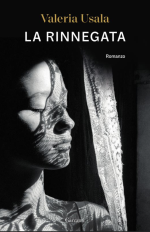
La rinnegata
A story of three generations of women, their courage and search for independence in the face of superstition and prejudice, in the spirit of Natalia Ginzburg and Elena Ferrante. In this striking debut, based on a true story, Valeria Usala bears witness to an age-old story of violence against women and takes us into the heart of rural Sardinia, where superstitions and cruelty coexist with the joys and companionship of a tight-knit community.
Teresa runs a shop and a tavern. But not even the family she has created with the man she loves can protect her from the malicious gossip of jealous locals, who are threatened by her independence. Her own mother, Maria, was made an outcast, and now Teresa is in turn forsaken by the villagers. Will she pay for her success with her life? Is she like a character in Greek tragedy, whose destiny is inevitable? A story that gives voice to the forgotten women of Sardinia—and to the one of women everywhere.
Written in Italian by Valeria Usala
10 minutes read
Szczerze mówiąc, kochanie, nic mnie to nie obchodzi
Translated from
Czech
to
Polish
by Agata Wróbel
Written in Czech by Lucie Faulerová
7 minutes read
Il depuratore
Translated from
Czech
to
Italian
by Elena Zuccolo
Written in Czech by Anna Háblová
11 minutes read
Va bene così
Translated from
Dutch
to
Italian
by Francesco Panzeri
Written in Dutch by Aya Sabi
7 minutes read
Dizionario del Detenuto
Written in Italian by Sara Micello
7 minutes read
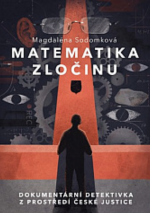
La huida (Las matemáticas del crimen)
Translated from
Czech
to
Spanish
by Enrique Gutiérrez
Written in Czech by Magdalena Sodomková
11 minutes read
Nu hrăniți maimuțele
Translated from
Spanish
to
Romanian
by Oana-Dana Balaş
Written in Spanish by Roberto Osa
7 minutes read
Een paar maanden later
Translated from
Slovenian
to
Dutch
by Staša Pavlović
Written in Slovenian by Andraž Rožman
11 minutes read
Rečnik zatvorenika
Translated from
Italian
to
Serbian
by Ana Popović
Written in Italian by Sara Micello
6 minutes read
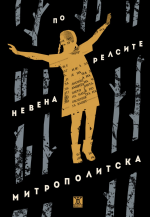
По шинама
Translated from
Bulgarian
to
Serbian
by Nikolina Đorđević
Written in Bulgarian by Nevena Mitropolitska
9 minutes read
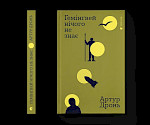
Hemingway no tiene ni idea
Este libro de prosa breve recoge el testimonio de un soldado sobre su experiencia en la guerra: la fe en el frente, la hermandad entre compañeros, el miedo y la esperanza, la muerte y el Amor. El autor revive sus recuerdos traumáticos, pero el texto acaba convirtiéndose en una forma de terapia no solo para él, sino también para quien lo lee. Habla de sí mismo, entrelaza realidad y sueños, pero sobre todo deja constancia de lo que significa vivir al límite. Retrata a personas capaces de un Amor inmenso sobre los que todo parece sostenerse. Aquí se le aparece el Señor de las Trincheras, comienza el Novísimo Testamento, la cultura ucraniana que cabe en una mochila se vuelve refugio, y los grandes nombres de la literatura bélica no resisten el contraste con la realidad. No tienen ni idea de nosotros, los ucranianos. De nuestra experiencia, solo podemos hablar nosotros mismos. En el frente del Este todo ha cambiado y Artur Dron lo cuenta sin rodeos, directo y honesto. Habla como solo hablan quienes han estado al límite y han vuelto.
Translated from
Ukrainian
to
Spanish
by Alina Petryk
Written in Ukrainian by Artur Dron
12 minutes read
Втеча (Математика злочину)
Translated from
Czech
to
Ukrainian
by Olha-Anastasiia Futoran
Written in Czech by Magdalena Sodomková
9 minutes read
Gevangeniswoordenboek
Translated from
Italian
to
Dutch
by Sandra Verhulst
Written in Italian by Sara Micello
7 minutes read
Sinossi
Written in Italian by Arianna Giorgia Bonazzi
4 minutes read
Op weg naar huis
Translated from
Italian
to
Dutch
by Sandra Verhulst
Written in Italian by Fabrizio Allione
10 minutes read

Cambiar de idea
Written in Spanish by Aixa De la Cruz Regúlez
7 minutes read
Omgekeerde opstandigheid
Translated from
Romanian
to
Dutch
by Jan Willem Bos
Written in Romanian by Cătălin Pavel
12 minutes read
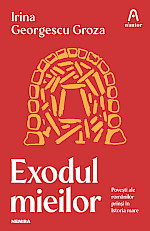
De exodus van de lammetjes
Translated from
Romanian
to
Dutch
by Charlotte van Rooden
Written in Romanian by Irina Georgescu Groza
13 minutes read
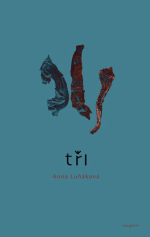
Tři!
Experimentální román Tři! rozvíjí zkušenost terapeutického sezení, ve kterém se autobiografické motivy prolínají s jazykovou hrou, a do kterého úmyslně vstupuje ta, která se vyprávěním snaží znovu vynalézt sebe sama. Komentáře terapeuta motivují cestu tohoto pátrání po identitě, vedoucího stále hlouběji, až na hranici disociace. Muž a žena v jedné osobě, ale i muž a žena vedle sebe, usilují o splynutí, a vedou tak otevřenou polemiku s autenticitou, rodem i narací.
„Možná to bylo v babiččině spíži, když jsem si prohlížela sklenici s kečupem, na kterém bylo na bílém podkladě napsáno modře: jemný. Možná to byla jen ta schopnost všímat si detailů.“
Vzpomínky odhalované ve snaze pojmenovat jedno dospívání odráží i prostou zkušenost sídliště, chudoby, ale i dětství v druhé polovině devadesátých let na malém městě, či následný přechod do Prahy na studium filosofie, která je vším jiným než konejšivou utěšitelkou.
„Kdo ztrácí kontakt s hmotou, přijde nakonec o všechno.“
Written in Czech by Anna Luňáková
6 minutes read
No den comida a los monos
Written in Spanish by Roberto Osa
7 minutes read