CELA About Participants READING ROOM News and reflections Events Contact

Facebook Instagram Newsletter LinkedIn
View all filters Ourselves and Others Desires Clear

Ourselves and Others

Explore identity and connection through the body, family dynamics and self-reflection

Wszystkie zwierzęta polne

Translated from Spanish to Polish by Katarzyna Górska
Written in Spanish by Adriana Murad Konings
7 minutes read

Niti

Translated from Dutch to Serbian by Aleksandar Đokanović
Written in Dutch by Hannah Roels
7 minutes read

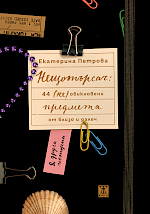
Encuentracosas: 44 objetos (in)usuales de cerca y lejos

Como sugiere su subtítulo, el libro Encuentracosas contiene historias sobre 44 objetos de cerca y lejos. La curiosa y variada selección, ordenada temáticamente, incluye sorprendentes hallazgos de todo el mundo: Botas de Bután, losetas de Barcelona diseñadas por Gaudí, copas de vino del País Vasco, un broche en forma de corazón de Sarajevo, alpargatas de los Pirineos, escarabajos del antiguo Egipto, un cubo de basura de Nueva York, un trozo de tela naranja de los muelles flotantes del lago Iseo, una campana de dragón eslovena, un mapa de Berlín del Este y mucho más. Al narrar las historias de estos objetos concretos, Ekaterina Petrova cuenta en realidad las historias de los lugares de los que proceden —Kustendorf y Katmandú, Liubliana y Luisiana, Belvedere y Bilbao, Selcuk y Central Park—, situándolos al mismo tiempo en un contexto lingüístico, cultural, histórico, antropológico o geográfico más amplio. Los textos, una ingeniosa mezcla entre cuaderno de viaje, ensayo y relato corto, están cuidadosamente elaborados y repletos de curiosidades, pero refractados a través de la perspectiva subjetiva de la autora, así como de su biografía personal como viajera, traductora y encuentracosas. La maquetación del libro, realizada con el ojo estético de Lyuba Haleva, una de las ilustradoras búlgaras contemporáneas más destacadas, capta de forma espléndida y humorística el espíritu y el carácter de los relatos. De esta forma, el propio libro se convierte en un objeto bello, placentero y alegre, para leer y releer; un libro que poseer y regalar.

Translated from Bulgarian to Spanish by Marco Vidal
Written in Bulgarian by Ekaterina Petrova
10 minutes read

Manoeuvre

Written in Dutch by Simone Atangana Bekono
8 minutes read

Samochód ze starożytnej Grecji

Translated from Czech to Polish by Agata Wróbel
Written in Czech by Ondrej Macl
9 minutes read

Diario de un último día

Translated from Dutch to Spanish by Irene de la Torre
Written in Dutch by Lotte Lentes
9 minutes read

Um carro da Grécia antiga

Translated from Czech to Portugese by Stepanka Lichtblau
Written in Czech by Ondrej Macl
11 minutes read

Di me non sai

Lucio falls in love with "the boy" even before meeting him: just watching him from the window of his office is enough for him to become almost obsessed. When they finally meet, he discovers that Davide is much younger than him (still studying), and that he is elusive, unreliable, and "cruel" in the way only twenty-year-olds can be cruel.

For two months, Lucio and Davide have dinner together, have sex, go to the beach, and often sleep at Lucio's place. However, Davide does not fall in love. He continues to seek Lorenzo, the only man he (perhaps) truly loved, of whom he keeps only a pixelated photo on an old cellphone. Like many twenty-year-olds, he is also confused, wounded, and willing to nestle into the routine of always having a Coca-Cola ready for him in the refrigerator.

"Di me non sai" tells the story of a relationship lived in an opposite, incompatible way, whose nature is revealed to the reader only as the novel progresses. Alternating the perspectives of the two protagonists in short, sometimes very short chapters, Raffaele Cataldo shows the misalignment of feelings and the painful consequences it can have, the slow pace of hot Apulian summers, and the obsessive loves (present and absent) that, like wild oat seeds, cling to hair, shoes, and clothes.

Written in Italian by Raffaele Cataldo
4 minutes read

Bučanje

Translated from Romanian to Slovenian by Lara Potočnik
Written in Romanian by Lavinia Braniște
8 minutes read

Тази дъвкана кръв

Translated from Italian to Bulgarian by Brigitte Mancuso
Written in Italian by Francesco Aloia
9 minutes read

Všechna polní i lesní zvěř

Translated from Spanish to Czech by Martina Kutková
Written in Spanish by Adriana Murad Konings
6 minutes read

Banánová generace: o dvojím životě současných čínských Nizozemců

Translated from Dutch to Czech by Barbora Genserová
Written in Dutch by Pete Wu
8 minutes read

Dopo l’ultima cena

Translated from Portugese to Italian by Francesca Leotta
Written in Portugese by José Gardeazabal
8 minutes read

După câteva luni

Translated from Slovenian to Romanian by Paula Braga Šimenc
Written in Slovenian by Andraž Rožman
17 minutes read

Clarões

Translated from Italian to Portugese by Vasco Gato
Written in Italian by Sara Micello
7 minutes read

Sommige dingen veranderen nooit

Translated from Portugese to Dutch by Finne Anthonissen
Written in Portugese by Luis Brito
5 minutes read

Un final fericit

Translated from Serbian to Romanian by Virginia Popovic
Written in Serbian by Jasna Dimitrijević
9 minutes read

El Corredor (Península)

Translated from Dutch to Spanish by Pablo Martín Sánchez
Written in Dutch by Lieven Stoefs
8 minutes read

Ptice ne preletavajo primestnih naselij

Translated from Serbian to Slovenian by Natalija Milovanović
Written in Serbian by Ana Marija Grbic
8 minutes read

De viltstift

Translated from Serbian to Dutch by Pavle Trkulja
Written in Serbian by Jasna Dimitrijević
8 minutes read
Loading...